Personalized Introduction
There are nights when I want takeout, but I also know I can make something just as satisfying in my own kitchen. That is exactly where this Beef Lo Mein comes in. Tender strips of beef, chewy noodles, crisp vegetables, and a glossy savory sauce all come together in one incredibly comforting meal.
I love this recipe because it feels like a restaurant-style dinner without requiring complicated cooking techniques. Once all the ingredients are prepared, everything comes together quickly in a hot skillet or wok. The noodles soak up that delicious sauce, the beef gets beautifully browned, and the vegetables keep just enough crunch to make every bite interesting.
If you have ever opened a takeout container and thought, “I could probably make this at home,” this is your chance. The flavor is rich, savory, slightly sweet, and completely customizable.
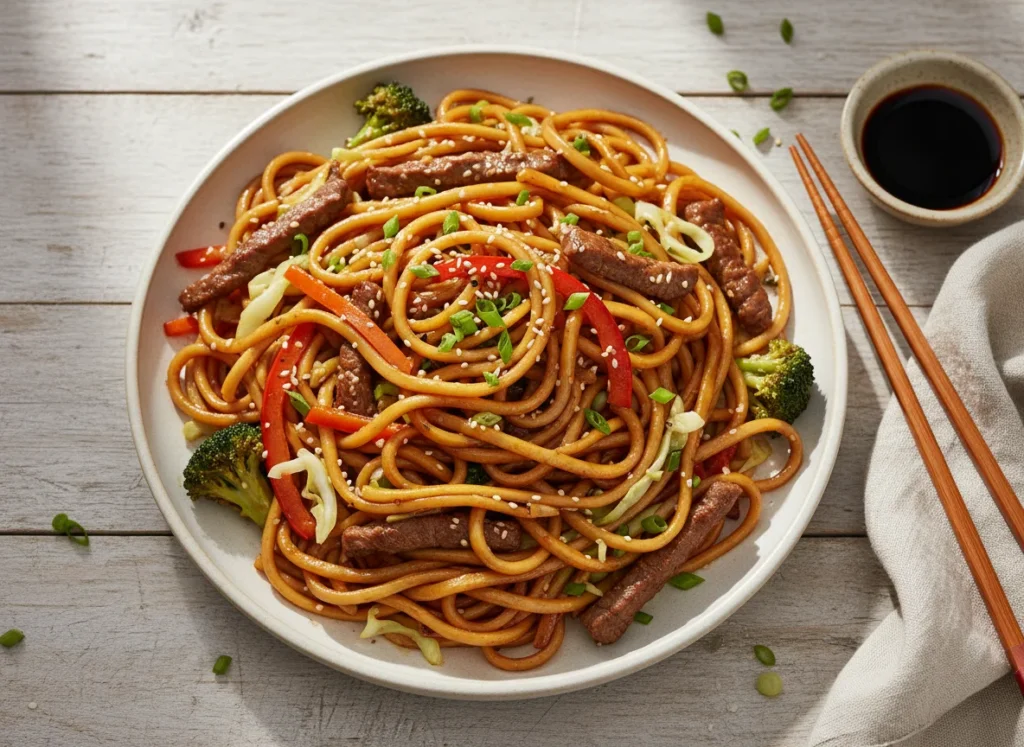
And honestly, the glossy noodles are one of my favorite parts. They look beautiful piled into a bowl, especially when finished with sliced green onions and sesame seeds.
Recipe Origin & Story
Lo mein is a popular Chinese noodle dish traditionally made with wheat noodles tossed with vegetables, protein, and a savory sauce. It is closely associated with Chinese-American takeout, where different versions often feature beef, chicken, shrimp, pork, or simply vegetables.
The name is commonly associated with tossed or mixed noodles, which is exactly what makes this dish so appealing. Rather than serving the sauce separately, the noodles are tossed together with the other ingredients so they become coated in all those savory flavors.
This homemade version takes inspiration from the takeout-style lo mein many of us know and love while keeping the ingredients accessible. You can find most of what you need at a regular grocery store, and the vegetables can easily be changed based on what you already have.
Ingredient Spotlight
- Main Star: Tender beef gives the lo mein its hearty flavor. Sirloin, flank steak, or another tender cut works beautifully when sliced thinly against the grain.
- Secret Boost: A small amount of toasted sesame oil adds a nutty aroma that makes the sauce taste much more restaurant-like.
- Quality Tips: Choose fresh vegetables with plenty of crunch, and slice the beef thinly. For the best texture, cut the meat against the grain so the finished pieces are easier to chew.
Nutritional Benefits
This beef lo mein combines protein, carbohydrates, and vegetables in one satisfying meal. Beef provides protein, iron, zinc, and vitamin B12, while vegetables such as carrots, cabbage, and bell peppers contribute fiber and a variety of vitamins and minerals.
If you want to increase the vegetable content, simply add more cabbage, broccoli, mushrooms, snow peas, spinach, or bell peppers. This is one of those recipes where adding extra vegetables is incredibly easy.
You can also control the amount of sauce and noodles depending on what kind of meal you prefer.
Adaptable Variations
- Dietary Swaps: Use gluten-free noodles and gluten-free soy sauce or tamari if needed. For a lighter version, increase the vegetables and reduce the noodles slightly.
- Flavor Twists: Add fresh ginger, extra garlic, chili crisp, crushed red pepper, sriracha, or a drizzle of chili oil.
- Seasonal Spins: Use asparagus and snow peas in spring, fresh bell peppers and zucchini in summer, mushrooms and cabbage in fall, or broccoli and carrots during winter.
Cooking Science Explained
The first secret to great beef lo mein is cooking the beef quickly over high heat. A hot pan helps the outside brown before the inside has a chance to overcook.
The second trick is slicing the beef against the grain. Muscle fibers run in a particular direction, and cutting across those fibers shortens them, creating a more tender bite.
Finally, do not overcrowd your pan. Too many ingredients at once can lower the temperature and cause the beef and vegetables to steam instead of getting that delicious stir-fried flavor.
When the sauce is added at the end, the hot noodles absorb it while the starch on their surface helps the sauce cling to every strand.
Easy, Step-by-Step Recipe
Ingredients
- 12 ounces lo mein noodles or fresh Chinese egg noodles
- 1 pound flank steak or sirloin steak, thinly sliced against the grain
- 2 tablespoons neutral cooking oil, divided
- 1 cup thinly sliced carrots
- 1 cup shredded cabbage
- 1 red bell pepper, thinly sliced
- 1 cup broccoli florets
- 3 green onions, sliced
- 3 cloves garlic, minced
- 1 teaspoon fresh grated ginger
For the beef marinade:
- 1 tablespoon soy sauce
- 1 teaspoon cornstarch
- 1 teaspoon sesame oil
- 1/2 teaspoon freshly ground black pepper
For the lo mein sauce:
- 1/4 cup low-sodium soy sauce
- 2 tablespoons oyster sauce
- 1 tablespoon hoisin sauce
- 1 tablespoon brown sugar
- 1 teaspoon toasted sesame oil
- 1 teaspoon rice vinegar
- 1/4 teaspoon white pepper
- 1/4 teaspoon crushed red pepper, optional
Instructions
- Thinly slice the beef against the grain. Place it in a bowl and add the soy sauce, cornstarch, sesame oil, and black pepper.
- Toss the beef until evenly coated and let it rest for approximately 10–15 minutes while you prepare the remaining ingredients.
- Cook the lo mein noodles according to the package directions. Cook them just until tender, avoiding overcooking.
- Drain the noodles well and toss them with a small amount of oil if necessary to prevent sticking.
- In a small bowl, whisk together the soy sauce, oyster sauce, hoisin sauce, brown sugar, sesame oil, rice vinegar, white pepper, and optional red pepper flakes.
- Heat a large wok or skillet over high heat.
- Add 1 tablespoon of cooking oil and carefully add the beef in a single layer. Cook for approximately 2–3 minutes, stirring occasionally, until browned and cooked through.
- Transfer the beef to a clean plate.
- Add the remaining tablespoon of oil to the pan.
- Add the carrots, bell pepper, broccoli, and cabbage. Stir-fry for approximately 3–4 minutes until the vegetables are crisp-tender.
- Add the minced garlic and fresh ginger and stir-fry for about 30 seconds.
- Return the cooked beef to the pan.
- Add the noodles and pour the prepared sauce over everything.
- Toss continuously for 1–2 minutes until the noodles are glossy and evenly coated with sauce.
- Add the sliced green onions and toss once more.
- Remove from the heat and serve immediately with additional green onions or sesame seeds if desired.
Practical & Valuable Tips
- Storage: Store leftover lo mein in an airtight container in the refrigerator for up to 3–4 days.
- Serving Ideas: Serve with steamed edamame, cucumber salad, spring rolls, dumplings, or simple stir-fried vegetables.
- Substitutions: Use chicken, shrimp, pork, tofu, or mushrooms instead of beef. Spaghetti can also work if you cannot find lo mein noodles.
The most important preparation tip is to have everything ready before you turn on the stove. Stir-frying happens quickly, so you do not want to be chopping vegetables while your beef is cooking.
Slice all the vegetables beforehand and mix the sauce in a small bowl. Once the pan is hot, the recipe moves very quickly.
If your beef is difficult to slice thinly, place it in the freezer for about 15–20 minutes first. The slightly firmer texture makes thin slicing much easier.
Do not boil the noodles until they are extremely soft. They will continue cooking briefly when they hit the hot wok with the sauce.
Make-Ahead & Batch-Cooking
Beef lo mein is an excellent meal-prep recipe because the components can be prepared separately. Slice and marinate the beef, chop the vegetables, and mix the sauce in advance.
Keep the prepared ingredients refrigerated until you are ready to cook. When dinner time arrives, everything can go into the hot pan within minutes.
For batch cooking, divide the finished lo mein into individual containers. Let it cool appropriately before refrigerating, then reheat portions in a skillet or microwave.
If reheating in a skillet, add a small splash of water or broth. This helps loosen the sauce and brings some moisture back to the noodles.
Eco-Friendly Kitchen Hacks
- Use vegetables that are already sitting in your refrigerator instead of buying a special assortment.
- Turn leftover beef lo mein into lunch the next day rather than wasting small portions.
- Use the same cutting board and prep bowls efficiently to reduce water and cleanup.
- Buy larger packages of vegetables when you know you will use them across several meals.
- Save vegetable scraps that are suitable for homemade broth instead of immediately throwing them away.
Pairing Suggestions
- Beverages: Green tea, jasmine tea, iced tea, sparkling water with lime, lemonade, or a refreshing ginger drink.
- Sides & Sauces: Steamed dumplings, spring rolls, edamame, Asian cucumber salad, vegetable egg rolls, or a simple cabbage slaw.
For a complete takeout-style dinner at home, serve the lo mein with steamed dumplings and a crunchy cucumber salad. Add chili oil or sriracha at the table for anyone who enjoys extra heat.
Frequently Asked Questions
- What is the best beef for lo mein?
Flank steak and sirloin are excellent choices. Slice either one thinly against the grain for the most tender results. - Can I use spaghetti instead of lo mein noodles?
Yes. It will not be exactly the same as traditional lo mein noodles, but spaghetti can work surprisingly well as a convenient substitute. - How do I keep the beef tender?
Slice it thinly against the grain, marinate it briefly with soy sauce and cornstarch, and cook it quickly over high heat. - Can I add different vegetables?
Absolutely. Broccoli, mushrooms, snow peas, bok choy, spinach, zucchini, bean sprouts, and onions all work beautifully. - Why did my noodles become soggy?
They may have been overcooked before stir-frying or left sitting in water after cooking. Drain them thoroughly and cook them just until tender. - Can I make beef lo mein spicy?
Yes. Add crushed red pepper, chili oil, chili crisp, sriracha, or sliced fresh chili peppers.
Call to Action
If you are craving Chinese takeout but want something fresh and homemade, this Beef Lo Mein is a fantastic place to start. Tender beef, glossy noodles, crunchy vegetables, and a savory sauce come together quickly for a dinner that feels special without being complicated.
Try it with your favorite vegetables, adjust the spice level to your liking, and make the sauce as sweet, savory, or spicy as you prefer.
Save this recipe to Pinterest for your next busy weeknight and share it with someone who is always tempted to order takeout. Once you see how quickly this comes together, you may find yourself making it at home more often.
Bonus: Your Kitchen Notes
This recipe is one of those meals where preparation makes all the difference. Before you heat the wok, have the beef sliced, the vegetables chopped, the noodles cooked, and the sauce mixed.
Once the pan is hot, everything happens quickly. That is actually one of the fun parts of making lo mein. You get to see the whole dish come together in just a few minutes.
If you want an even more restaurant-style texture, cook the beef in batches rather than putting the entire pound into a crowded pan. A little extra space allows the beef to brown instead of releasing moisture and steaming.
For spicy beef lo mein, add chili crisp to the sauce. It gives the noodles heat along with a wonderful savory texture. You can also add thinly sliced fresh chilies for a brighter, sharper heat.
For garlic lovers, increase the garlic from three cloves to four or five. Fresh garlic becomes wonderfully fragrant when it hits the hot wok for those few seconds.
For a ginger-forward version, add a little more freshly grated ginger. It brings a warm, fresh flavor that works especially well with beef and sesame oil.
If you like mushrooms, add sliced cremini, shiitake, or oyster mushrooms. Cook them before adding the other vegetables so they have time to brown and develop their savory flavor.
You can also turn this into a beef and broccoli lo mein by increasing the broccoli and reducing some of the other vegetables. The same sauce works beautifully with that combination.
For extra crunch, finish the dish with toasted sesame seeds, sliced green onions, crushed peanuts, or cashews. Add them right before serving so they stay crunchy.
If you prefer a sweeter takeout-style sauce, add another teaspoon of brown sugar or a small drizzle of honey. If you prefer something more savory, reduce the sugar slightly and increase the oyster sauce.
Be careful with extra soy sauce, though. It is much easier to add more saltiness at the end than to fix a dish that has become too salty.
Leftovers can be surprisingly delicious. The noodles absorb even more of the sauce as they sit, creating a rich flavor the next day. If they seem dry after refrigeration, add a splash of water before reheating.
You can also transform leftover lo mein into a completely different meal. Add a fried egg on top, serve it alongside leftover roasted vegetables, or toss in some cooked chicken or shrimp.
If you are cooking for a large family, double the ingredients, but use a very large wok or cook in batches. Overcrowding is one of the easiest ways to lose that delicious stir-fried texture.
And do not be afraid to clean out the vegetable drawer with this recipe. A handful of cabbage, one lonely carrot, some mushrooms, half a bell pepper, or a few snow peas can all find a home in a good plate of lo mein.
That is what makes homemade lo mein so useful. It is not just a recipe; it is a flexible formula for turning simple ingredients into a satisfying dinner.
Once you get the basic sauce and cooking method down, you can create countless versions. Beef today, chicken tomorrow, shrimp next weekend, and a completely vegetable-packed version whenever you feel like keeping things lighter.
So gather your ingredients, get your pan nice and hot, and have everything within reach. When those noodles hit the sauce and become glossy and deeply savory, you will understand why homemade Beef Lo Mein can give your favorite takeout order some serious competition.